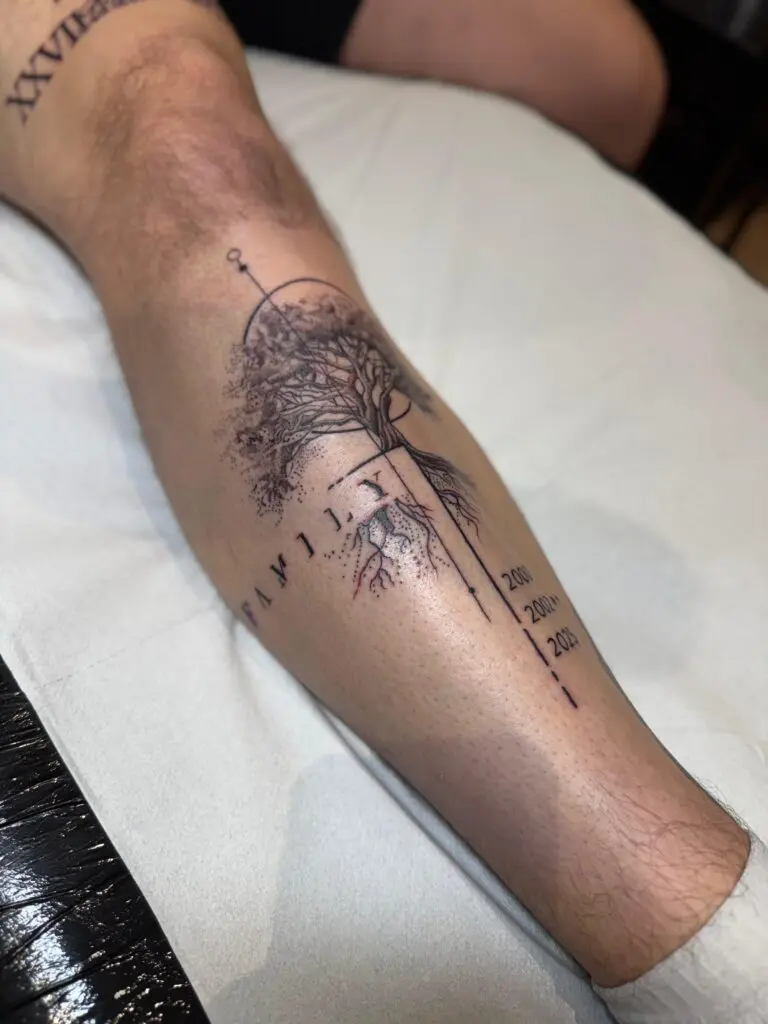
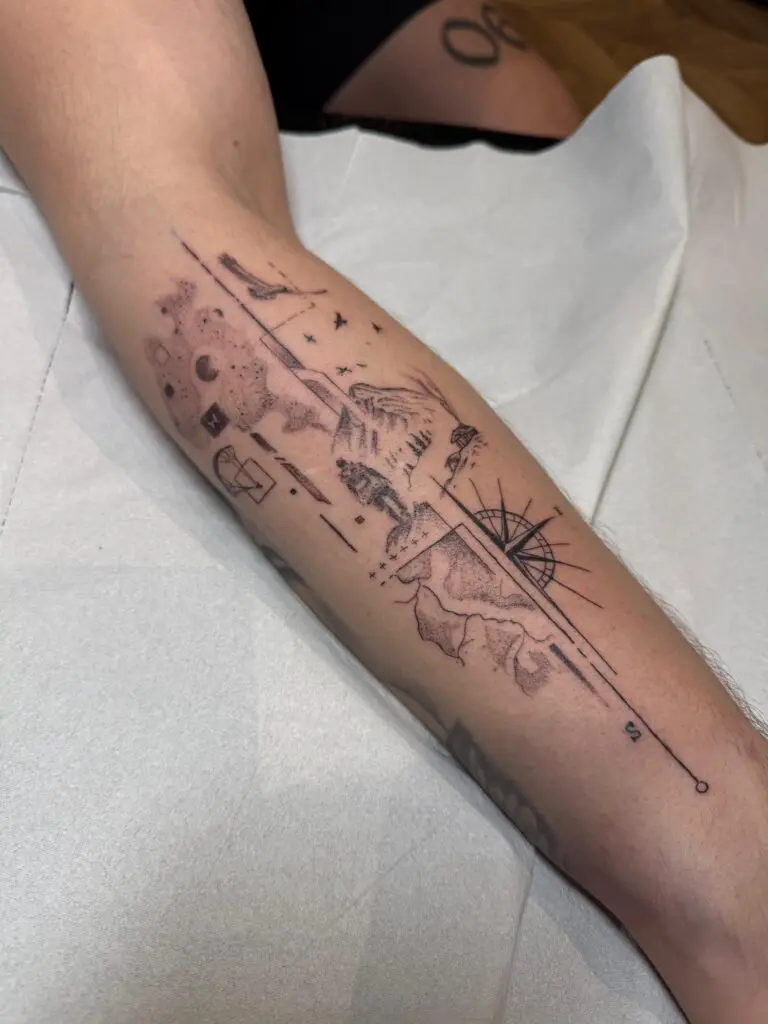
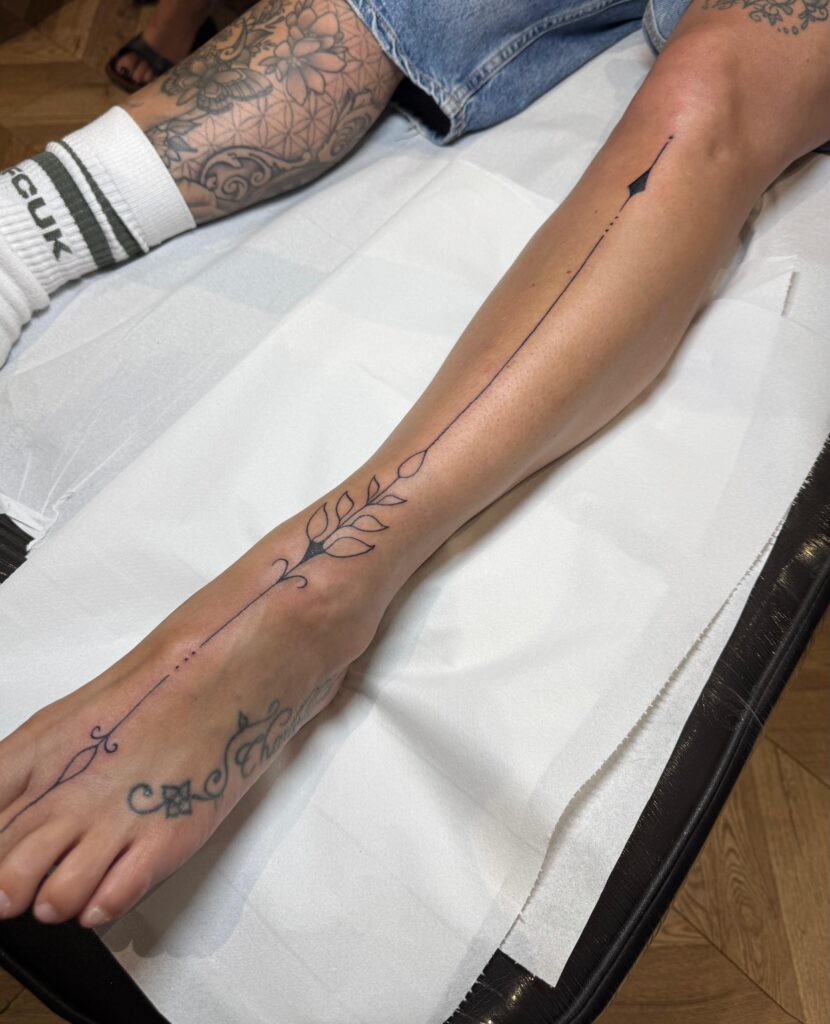
Not every tattoo needs bold colours, dramatic shading or an elaborate design to make an impression. Sometimes, a few carefully placed lines can create something far more striking. If you’re looking for a linework tattoo shop in Essex, Inception Ink Tattoo Lounge in South Woodham Ferrers offers a welcoming environment where you can explore everything from delicate minimalist tattoos to intricate custom linework designs.
Linework tattoos have become increasingly popular, and it’s easy to understand why. They’re versatile, visually distinctive and can be adapted to suit almost any subject. A single continuous line might capture the outline of a face, a delicate floral design can follow the natural shape of an arm, or a geometric pattern can transform a simple concept into something completely individual.
However, there’s a misconception that linework tattoos are somehow easier than more detailed styles. In reality, when a design relies almost entirely on clean lines, there’s very little room to disguise imperfections. Every curve, connection and change in direction matters.
At Inception Ink, we’re proud to have been recognised as Best Tattoo Studio in Essex in 2025. Our team understands that even the smallest tattoo deserves careful consideration, from the initial design through to its placement and aftercare. Whether you’re considering your first tattoo or adding something new to an existing collection, we’re here to help you find a design that feels right for you.
What Is a Linework Tattoo?
A linework tattoo is a design created primarily through the use of lines rather than large areas of shading or colour. The lines themselves become the defining feature, creating shapes, patterns, illustrations or more abstract imagery.
Some linework tattoos use incredibly fine lines to produce delicate designs. Others feature thicker outlines, repeating patterns or a combination of different line weights.
This makes linework tattooing a much broader category than many people realise.
For example, a minimalist flower created using a single continuous line is a linework tattoo, but so is a complex geometric design made up of dozens of intersecting shapes. Architectural illustrations, abstract portraits, botanical designs and ornamental patterns can all fall within the same general style.
The defining characteristic is that the design relies heavily on the precision and placement of its lines.
Unlike traditional tattoos, which often incorporate bold outlines and solid areas of colour, many linework tattoos use open space to create their impact. The surrounding skin becomes part of the composition, allowing the design to feel lighter and less visually dense.
It’s a style that offers enormous creative freedom, but it also requires careful planning to ensure the finished tattoo works on skin rather than just looking attractive on paper.
What’s the Difference Between Fine Line and Linework Tattoos?
If you’ve been researching tattoo shops in Essex, you’ve probably encountered both fine line and linework tattoos. Although the terms are often used together, they’re not exactly the same thing.
Fine line tattooing describes a technique or appearance involving particularly thin, delicate lines. These tattoos often feature subtle details, small illustrations and understated designs.
Linework is a broader term that refers to tattoos constructed primarily using lines. Those lines might be extremely fine, moderately thick or deliberately varied throughout the design.
A small butterfly created with delicate outlines could be considered both a fine line tattoo and a linework tattoo. However, a large geometric design featuring strong black lines would generally fall into the linework category without necessarily being described as fine line.
The distinction matters because different designs require different approaches.
Very delicate tattoos need careful consideration of size, spacing and how the lines may change over time. Larger, bolder linework pieces can create a completely different aesthetic, particularly when placed across the arm, back or leg.
At Inception Ink, we encourage clients to focus on the appearance they want rather than worrying about technical terminology. Bringing a few reference images is often the easiest way to explain the style you’re hoping to achieve.
Why Are Linework Tattoos So Popular?
One of the biggest attractions of linework tattooing is its simplicity. In a world where we’re constantly surrounded by complicated imagery, there’s something refreshing about artwork that communicates an idea using only a handful of carefully considered lines.
Minimalist linework tattoos are particularly appealing to people who want something subtle. They can be meaningful without being immediately obvious, decorative without being overwhelming and personal without needing to explain their significance to everybody.
However, linework isn’t limited to delicate designs.
Larger pieces can be incredibly striking, particularly when they use symmetry, repeating patterns or carefully controlled negative space. A detailed botanical illustration across the forearm or a geometric composition extending over the shoulder can have just as much visual impact as a full-colour tattoo.
Another reason for the style’s popularity is its adaptability. Linework can be used to represent almost anything, from flowers and animals to faces, landscapes, architecture and abstract concepts.
It also works well alongside other tattoo styles. Someone with traditional tattoos might choose a linework piece for a different area of their body, while a person with several minimalist tattoos could gradually build a cohesive collection.
The important thing is creating artwork that suits the individual rather than simply reproducing whichever design happens to be popular online.
Popular Linework Tattoo Ideas
There are almost endless possibilities when it comes to linework tattoos, but certain subjects lend themselves particularly well to the style.
Floral Linework Tattoos
Flowers and botanical illustrations are among the most popular choices for linework tattooing.
The natural curves of petals, stems and leaves translate beautifully into delicate outlines, making floral designs suitable for everything from small wrist tattoos to larger pieces extending along the arm or leg.
Roses, wildflowers, lilies, daisies and birth flowers are all popular options. Some people choose flowers because of their symbolic meanings, while others simply love the appearance of botanical artwork.
One advantage of floral linework is that designs can be adapted to follow the contours of the body. A long, delicate stem might sit naturally along the forearm, while a collection of flowers could curve around the shoulder or collarbone.
Continuous Line Tattoos
Continuous line tattoos create an image using what appears to be one uninterrupted line.
They’re often inspired by minimalist illustration, where an entire subject is represented through a simple, flowing outline.
Faces, bodies, animals and flowers work particularly well with this approach. The appeal lies in how much character can be captured without adding unnecessary detail.
However, creating an attractive continuous line design requires careful consideration. A line that looks effortless is often the result of considerable planning, particularly when the artist needs to balance recognisability with simplicity.
Geometric Linework Tattoos
Geometric tattoos use shapes, symmetry, repetition and mathematical-looking patterns to create structured designs.
Triangles, circles, hexagons and interlocking forms can be combined to produce everything from small minimalist pieces to large ornamental compositions.
Some geometric tattoos incorporate natural imagery, such as animals or flowers, while others remain entirely abstract.
Precision is especially important with this style. Straight lines, consistent spacing and balanced symmetry all contribute to the finished appearance.
It’s also worth remembering that the human body isn’t a completely flat surface. A geometric design needs to be positioned carefully to account for the curves and movement of the area being tattooed.
Animal Linework Tattoos
Animals can be interpreted in countless ways through linework.
A pet portrait might use delicate outlines to capture a familiar expression, while a larger wildlife design could incorporate more complex illustration and varied line weights.
Dogs, cats, birds, butterflies and woodland animals are all popular subjects.
For people wanting a tattoo of a beloved pet, linework can be an attractive alternative to a realistic portrait. Rather than attempting to recreate every detail of the animal’s appearance, the design can focus on its most recognisable characteristics.
Abstract Linework Tattoos
Not every tattoo needs to represent something immediately recognisable.
Abstract linework designs can use flowing shapes, overlapping curves, irregular patterns and negative space to create something entirely individual.
These tattoos often work particularly well when designed around the body itself, allowing the lines to follow the natural contours of the arm, shoulder, back or leg.
Abstract designs can be purely decorative or carry personal meaning that isn’t obvious to anybody else.
There’s no rule that says a tattoo needs to tell a story. Sometimes the appearance of the artwork is reason enough to wear it.
Do Linework Tattoos Have to Be Small?
Absolutely not. Although linework is often associated with tiny minimalist tattoos, the style can be used for designs of almost any size.
Small linework tattoos can look beautiful on the wrist, ankle, forearm or collarbone, provided the details are suitable for the available space.
Medium-sized designs offer greater flexibility, particularly when the artwork contains multiple elements or more intricate outlines.
Larger linework tattoos can make impressive statement pieces. Full botanical sleeves, ornamental back tattoos and extensive geometric compositions are all examples of how the style can be developed beyond a simple illustration.
The main consideration is ensuring that the design has enough space to work properly.
Some clients arrive with detailed artwork they want reduced to just a few centimetres. Although the idea may look attractive on a screen, transferring that level of detail onto skin isn’t always practical.
A responsible tattoo artist should explain when certain elements need to be enlarged, simplified or spaced further apart.
At our Essex tattoo lounge, we’d rather discuss those adjustments before tattooing begins than create something that may become difficult to recognise as it ages.
Do Linework Tattoos Age Well?
This is one of the most important questions to ask before getting a linework tattoo.
All tattoos change over time. Ink can gradually spread slightly within the skin, lines may appear softer and exposure to sunlight can contribute to fading.
How noticeable these changes become depends on several factors, including the design, placement, application, individual skin characteristics and aftercare.
Fine line tattoos require particular consideration because very delicate details can become less distinct as the tattoo ages.
For example, a flower with tiny, closely spaced petals may initially look beautifully intricate. However, if there isn’t enough separation between those lines, the detail could become less readable over time.
This doesn’t mean fine line tattoos are a poor choice. It means the design needs to account for how tattoos behave on real skin.
Slightly larger compositions, appropriate spacing and carefully selected line weights can help improve long-term readability.
It’s also important to understand that a fresh tattoo photograph doesn’t necessarily demonstrate how a design will look several years later.
When researching a linework tattoo artist in Essex, looking at healed examples of their work can be particularly useful.
Where Is the Best Placement for a Linework Tattoo?
Placement can make a significant difference to the overall appearance of a linework tattoo.
Because many designs rely on clean outlines and negative space, the shape of the body can become an important part of the composition.
The forearm is a popular location because it offers a versatile surface for floral designs, abstract illustrations, geometric artwork and minimalist pieces.
The upper arm and shoulder provide more flexibility for larger compositions. These areas are particularly suitable for designs that wrap around the body or incorporate multiple elements.
Collarbone tattoos often work well with delicate linework, especially when the design follows the natural curve of the area.
The ribs can be an attractive placement for flowing botanical designs or longer illustrations, although they can also be a more sensitive area to tattoo.
Back tattoos offer considerable creative freedom, particularly for symmetrical geometric designs and larger ornamental pieces.
Ankles and wrists are often chosen for smaller minimalist tattoos. However, designs in these areas need careful planning, especially when they contain very fine details.
Hands and fingers require additional consideration because of regular friction, movement and exposure. Tattoos in these locations may fade or change more quickly, and touch-ups can sometimes be necessary.
When planning your appointment at Inception Ink, we can discuss how the shape and size of your chosen design might work on different areas of the body.
Can Linework Tattoos Be Personalised?
One of the best things about linework tattooing is how easily it can be adapted to create something personal.
You might want an outline of your childhood home, the silhouette of a favourite holiday destination or a drawing inspired by somebody important to you.
Some people choose to have their children’s artwork adapted into tattoos. Others prefer abstract representations of meaningful experiences or places.
Pet owners might want a simple outline based on a photograph of their dog or cat, while someone looking for a memorial tattoo could incorporate a flower, symbol or handwritten element into a linework composition.
There’s also plenty of room for humour and creativity.
A quirky illustration, unusual object or deliberately playful design can work particularly well in a minimalist style.
At Inception Ink, we believe tattoos should reflect the person wearing them. You don’t need a dramatic story or deeply symbolic meaning to justify your design.
Whether your tattoo represents an important memory or simply makes you smile, it deserves the same consideration and attention to detail.
Linework Tattoos and Negative Space
One of the defining characteristics of many linework tattoos is the way they use negative space.
Negative space refers to the areas of skin left untattooed within or around the design.
Rather than filling every section with ink, the artist allows these open areas to contribute to the artwork.
For example, a linework portrait might use only a few carefully positioned lines to suggest the shape of a face. Your eye naturally fills in the missing information.
Similarly, botanical tattoos can use open space between petals and leaves to maintain a light, airy appearance.
Negative space is particularly important when designing tattoos with long-term readability in mind.
If too many lines are placed close together, the composition can become visually crowded. Leaving sufficient space helps preserve the distinction between individual elements.
This is one of the reasons a simple-looking linework tattoo can require considerable design expertise.
The artist needs to understand not only where the lines should go, but also where they shouldn’t.
Are Linework Tattoos Painful?
Linework tattoos involve the same basic tattooing process as other styles, so some discomfort should be expected.
However, the experience varies considerably depending on the placement, duration of the appointment and individual pain tolerance.
A small minimalist tattoo may take less time than a larger design, which can make the experience feel more manageable for some people.
On the other hand, an extensive linework composition may require a longer appointment, particularly when it contains complex patterns or numerous precise details.
Certain areas of the body are generally considered more sensitive than others.
The ribs, feet and areas close to bone can be more uncomfortable, while fleshier areas such as the outer upper arm may feel more manageable for some clients.
If you’re nervous about your first tattoo, there’s no need to pretend otherwise.
Our team at Inception Ink is happy to explain the process, discuss placement and answer questions before your appointment.
Feeling informed about what to expect can make the experience much less intimidating.
Can Linework Be Used for Tattoo Cover-Ups?
Although linework tattoos are beautiful, they’re not always the most suitable option for covering existing tattoos.
A successful cover-up generally requires enough shading, colour or darker areas to disguise the original ink.
Because linework designs often contain substantial negative space, the previous tattoo may remain visible underneath.
However, some existing tattoos may be suitable for reworking, incorporating into a larger design or combining with additional shading.
The possibilities depend on the original tattoo’s size, colour, density and placement.
For example, a faded outline might be suitable for adjustment or incorporation into new artwork, while a dark, heavily saturated design may require a different approach.
In some cases, laser lightening before a cover-up can provide greater flexibility.
If you’re considering changing an existing tattoo, it’s worth discussing the options with an experienced artist rather than assuming that any design can simply be placed over the top.
Inception Ink welcomes tattoo cover-up enquiries, and our team can help assess what’s realistically achievable.
Choosing a Linework Tattoo Artist in Essex
Finding a tattoo artist whose work matches the style you’re looking for is one of the most important parts of the process.
Linework tattooing places considerable emphasis on precision, line consistency and thoughtful design.
When researching artists, look closely at their portfolios.
Are the lines clean and deliberate? Do the designs appear balanced? Is the spacing appropriate for the level of detail involved?
It’s also worth considering whether the artist regularly works with the type of linework you’re interested in.
Someone who creates delicate botanical illustrations may have a different artistic approach from somebody specialising in large geometric compositions.
Neither is necessarily better, but finding the right match can make a significant difference to your experience.
Communication is equally important.
Your artist should be willing to discuss the design, explain any technical limitations and suggest adjustments where appropriate.
You should never feel uncomfortable asking why a particular size or placement has been recommended.
At Inception Ink, our artists bring different approaches and strengths to the studio. When you contact us with your ideas, we can discuss the design and help establish which artist would be most appropriate for the work you’re considering.
Why Choose Inception Ink for Linework Tattoos in Essex?
There are plenty of tattoo studios in Essex, but finding somewhere that combines technical care with a comfortable, welcoming environment is important.
Inception Ink Tattoo Lounge is based in South Woodham Ferrers, and we’re proud to have been recognised as Best Tattoo Studio in Essex in 2025.
Our team includes Luke, Danielle, Marek, Tyler and apprentice Amy, offering clients access to different artistic approaches and styles.
We welcome everyone from first-time clients to experienced tattoo collectors, and we understand that no two people arrive with exactly the same expectations.
Some clients come in with a detailed idea and reference images. Others know they love the appearance of linework tattoos but haven’t quite decided what they want.
Both are perfectly fine.
We believe the consultation process should be about helping you make an informed decision rather than pressuring you into a particular design.
If your idea needs to be slightly larger to retain its details, we’ll explain why. If a different placement would work better, we’ll discuss the options.
And if you’re simply looking for a small, understated design, there’s no expectation that you need to turn it into something more elaborate.
Professionalism, clear communication and realistic advice are just as important to us as the finished artwork.
We want clients to feel comfortable asking questions, exploring possibilities and taking the time they need to make the right choice.
Visiting Our Tattoo Shop in South Woodham Ferrers
Inception Ink is located in South Woodham Ferrers, Essex, making our studio accessible to clients from Chelmsford, Maldon, Rayleigh, Wickford, Basildon, Southend and surrounding areas.
If you’ve been searching for a linework tattoo shop near me, we’d encourage you to consider the quality of the artwork and the studio environment alongside convenience.
A tattoo is a long-term commitment, and finding an artist who understands the style you want is worth the effort.
Whether you’re travelling from nearby or visiting us from another part of Essex, our team is happy to discuss your ideas before booking.
When contacting us, it helps to include a brief description of the design, your preferred placement, approximate size and any reference images you like.
You don’t need to have every detail decided. We can help you explore the options and understand what might work best.
Frequently Asked Questions About Linework Tattoos
How much does a linework tattoo cost in Essex?
The price depends on the size, complexity, placement and time required. A small minimalist outline will usually require a different amount of work from a large geometric or botanical composition. Contact Inception Ink with your idea for an accurate quotation.
Are linework tattoos the same as fine line tattoos?
Not exactly. Fine line tattooing typically uses particularly thin, delicate lines, while linework is a broader category covering tattoos constructed primarily through lines of various thicknesses.
Do linework tattoos fade quickly?
All tattoos can fade or change over time. Very fine lines may become less distinct, especially when designs are extremely small or contain closely spaced details. Good design, appropriate application and aftercare can help support long-term appearance.
Can I have a linework tattoo in colour?
Yes. Although black ink is particularly popular for linework designs, coloured lines are also possible. Your artist can discuss how the choice of colour might affect the appearance and longevity of your design.
Are linework tattoos suitable for first tattoos?
Yes. Linework tattoos can be an excellent choice for first-time clients because they offer a wide range of sizes and styles. The most important consideration is choosing a design and placement that suit you.
Can you turn a photograph into a linework tattoo?
Many photographs can be used as inspiration for linework designs. However, they may need to be simplified or adapted to create an attractive and practical tattoo.
How long does a linework tattoo take to heal?
The surface of a tattoo often settles within a few weeks, although deeper healing continues for longer. Healing times vary between individuals, and following the aftercare advice provided by your artist is important.
Book Your Linework Tattoo in Essex
Whether you’re considering a delicate floral illustration, a minimalist portrait, an abstract design or a larger geometric piece, Inception Ink Tattoo Lounge would love to hear your ideas.
Linework tattoos demonstrate that impressive artwork doesn’t always require elaborate shading or bright colours. Sometimes the most effective designs are the ones that use just enough detail to communicate something meaningful.
The key is getting those details right.
From selecting the appropriate size and placement to ensuring the lines are clear and the composition feels balanced, good planning can make all the difference to the finished result.
If you’re looking for a linework tattoo shop in Essex, get in touch with our award-winning team in South Woodham Ferrers.
Send us your ideas, share any reference images and let us help you explore the possibilities for your next tattoo.
After all, sometimes the simplest designs make the biggest impression.