
Choosing large scale tattoos in Essex is very different from choosing a small tattoo. Large tattoos are planned pieces of artwork that take time, thought and experience to complete properly. When someone commits to a sleeve, back piece or large composition, they are investing in something that will develop across multiple sessions and often across several months.
At our Essex tattoo shop we see many clients who want tattoos that tell a bigger story across the body. Large tattoos allow artists to create flow, movement and depth in a way that smaller tattoos simply cannot achieve. They give the artist the space needed to build contrast, texture and detail so the design works from a distance as well as up close.
Over 15 years of tattooing Essex, still trusted by clients flying in from Canada, New Zealand and the States. Many of those clients travel specifically for larger projects because they want experienced artists who understand how to design tattoos that work with the body rather than fighting against it.
Large scale tattoos also tend to attract people who are either heavily tattooed already or who are ready to commit to a major piece as their next step. These tattoos require planning and patience, but the result can be some of the most striking work a tattoo artist creates.
What Counts As A Large Scale Tattoo
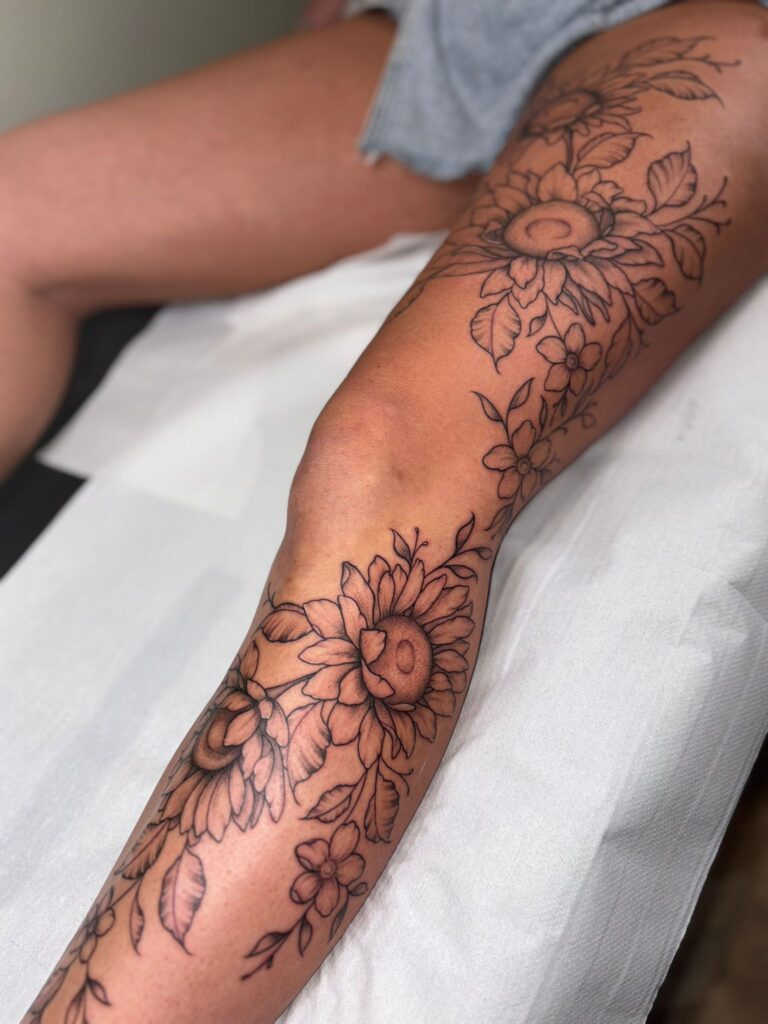
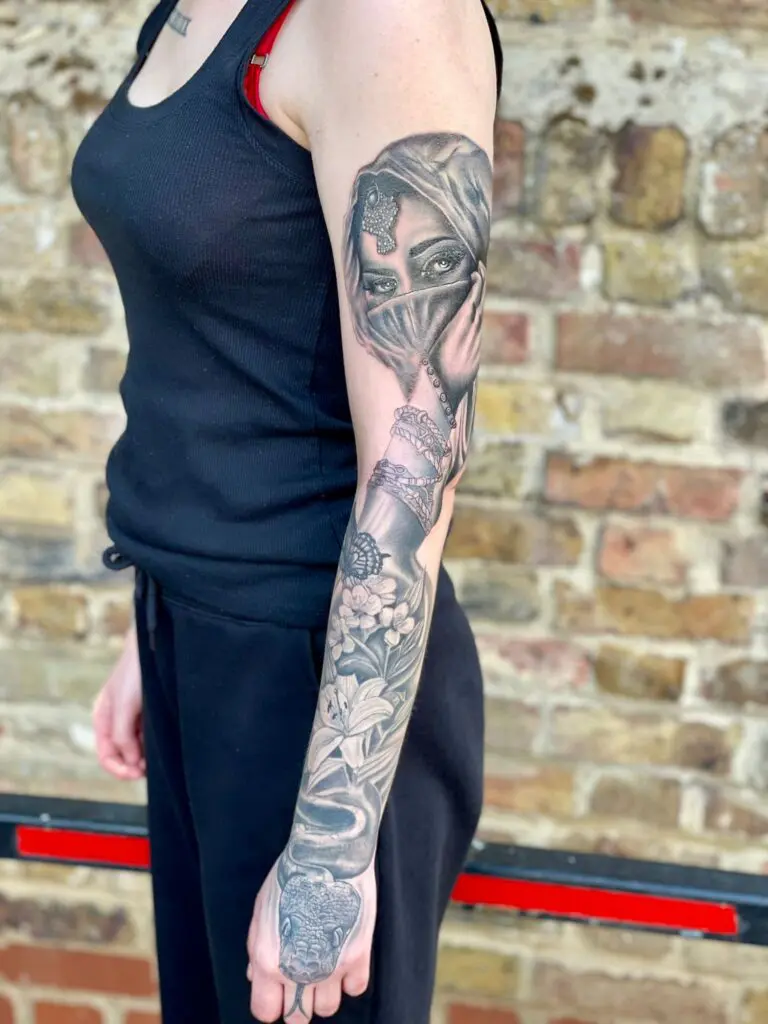
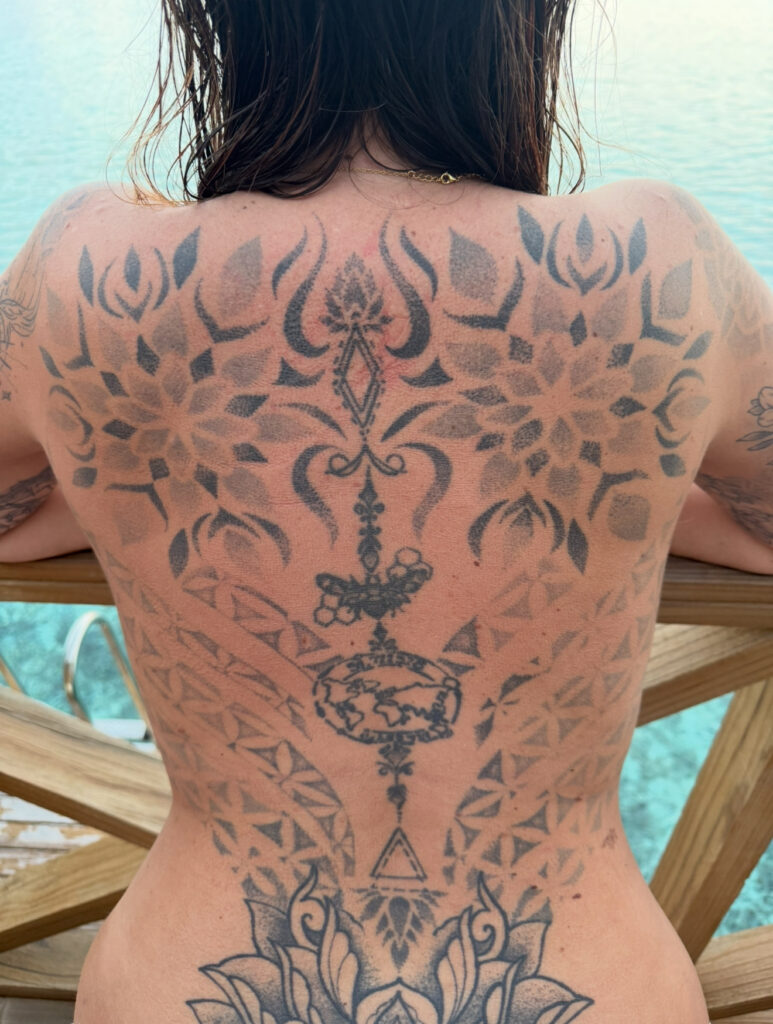
A large scale tattoo usually refers to tattoos that cover significant areas of the body. The most common examples include half sleeves, full sleeves, large chest pieces, thigh pieces and full back tattoos.
Unlike small tattoos that are completed in a single sitting, large tattoos usually take multiple sessions. This allows the artist to focus on each part of the design while giving the skin time to heal between appointments.
Large tattoos also involve a different level of planning. The design needs to move across the body in a natural way. If the artwork ignores the natural shape of the body it can end up looking awkward or forced.
Artists who regularly create large tattoos learn to design around muscles, joints and curves so the tattoo feels like it belongs to the person wearing it.
For example, sleeves often use the natural curve of the arm to guide the direction of the design. Back pieces use the spine as a central axis, allowing the artwork to flow outwards across the shoulders and down towards the lower back.
Understanding these principles is what separates a large tattoo that looks impressive from one that simply looks oversized.
Why Large Tattoos Need Careful Planning
One of the biggest mistakes people make when considering large scale tattoos in Essex is assuming they can simply add designs gradually without planning the overall composition.
While it is possible to build a sleeve from separate tattoos, the strongest large scale work usually begins with a clear plan for the entire area.
Planning allows the artist to control the spacing, flow and balance of the design. Without that structure the tattoo can start to feel crowded or disconnected.
A planned sleeve or back piece usually begins with the main focal point. This might be a portrait, an animal, a dragon, a floral centrepiece or another dominant subject.
Once the focal point is established the surrounding elements can be designed to support it. Backgrounds, textures and secondary elements help connect the piece into a complete composition.
Planning also helps the artist decide how much detail should appear in each part of the design. Too much detail everywhere can make the tattoo difficult to read visually. Strategic spacing allows the eye to move across the artwork naturally.
Large tattoos should feel balanced when viewed from different angles. The design should look strong when the body moves, not just when standing still.
The Importance Of Body Flow In Large Tattoos
Body flow is one of the most important aspects of large scale tattooing. The body is not a flat canvas. It curves, bends and moves constantly.
An experienced artist designs tattoos so they follow the natural direction of the body. This creates a sense of movement within the artwork.
For example, sleeves often wrap around the arm in a spiral or flowing pattern. This helps the tattoo appear cohesive when the arm rotates.
Back pieces usually build around the spine and shoulder blades, using those natural shapes to guide the layout.
Ignoring body flow can make even technically well executed tattoos look awkward. Designs that fight against the body’s shape tend to look distorted when the person moves.
Artists who specialise in large scale tattoos spend time studying how muscles and joints affect the visual flow of the design.
This understanding allows them to place focal points and background elements in positions that work with the body rather than against it.
Styles That Work Well For Large Scale Tattoos
Many tattoo styles translate well into large scale work. Some styles almost demand larger space because the detail and composition benefit from having room to develop.
Realism tattoos are a good example. Realistic portraits, animals and detailed imagery need enough space to capture shading, highlights and texture.
Japanese tattooing is another style that often works best in larger formats. Traditional Japanese designs use flowing backgrounds such as waves, clouds and wind bars that naturally extend across sleeves and back pieces.
Traditional tattoos can also work well at larger scale, especially when they are built into sleeves with bold imagery and strong outlines.
Ornamental and dot work tattoos often appear in larger compositions as well. These styles rely on repeating patterns and shading techniques that benefit from wider surfaces.
Choosing the right style for a large tattoo usually depends on both the subject matter and the body area being tattooed.
How Long Large Tattoos Usually Take
Large tattoos rarely happen in a single appointment. Even a half sleeve can take several sessions depending on the level of detail involved.
Sessions may be spaced several weeks apart to allow the skin to heal fully. Healing time is important because tattooing over irritated or damaged skin can affect the final result.
Back pieces and full sleeves can take months or even longer to complete. Some large projects develop over more than one season depending on the schedule of the client and the artist.
The time investment may sound significant, but it allows the artist to work carefully and build the design layer by layer.
Rushing large tattoos often leads to compromises in quality, which is why experienced artists prefer to approach them methodically.
Who Gets Large Scale Tattoos
Clients interested in large scale tattoos in Essex come from many different backgrounds. Some are already heavily tattooed and want to expand their collection into larger compositions.
Others may be getting their first large tattoo after previously choosing smaller pieces.
Large tattoos often appeal to people who want something more personal and expressive. These pieces give artists the opportunity to create artwork that reflects personal stories, interests or cultural influences.
Clients sometimes bring detailed ideas, while others prefer to collaborate with the artist to develop the concept together.
Both approaches can work well as long as there is clear communication during the consultation process.
Choosing The Right Artist For Large Tattoos
Selecting the right artist is particularly important when planning large scale tattoos. Not every tattoo artist specialises in large work, and the skills required are slightly different from smaller pieces.
Artists who regularly create sleeves and back pieces understand how to plan compositions across large areas of skin.
They also understand how to maintain consistent line work and shading across multiple sessions.
At our Essex tattoo shop large scale tattoos can be completed by several artists depending on the style of the design. Each artist brings their own strengths to the process.
Consultations allow clients to discuss their ideas with the artist and determine who is the best fit for the project.
Starting A Large Tattoo Project
The first step in starting a large tattoo is usually a consultation. This conversation allows the client and artist to explore ideas and determine how the tattoo should develop across the body.
During this stage the artist may suggest adjustments to placement, size or composition so the tattoo works as well as possible.
Reference images can help communicate the overall direction of the design, although the final artwork will usually be drawn specifically for the client.
Once the design concept is agreed the tattoo sessions can begin. Large tattoos often develop gradually as each session adds another layer of detail to the piece.
This slow process allows the tattoo to evolve into a finished work that feels cohesive and balanced.
Planning A Sleeve Or Large Tattoo Properly
When clients start researching large scale tattoos in Essex, one of the first decisions they face is whether they want a fully planned composition or a collection of tattoos that gradually develop into a sleeve.
Both approaches exist in tattooing. However, they create very different visual results.
A fully planned sleeve begins with the entire arm mapped out before tattooing begins. The artist designs the main focal points, the background elements and the way the design will flow around the arm. This approach creates a cohesive piece where every part of the tattoo connects visually.
Patchwork sleeves are built from separate tattoos placed next to each other over time. Some people prefer this because they enjoy collecting individual designs across the arm.
The challenge with patchwork sleeves is that they can become crowded if the spacing and sizing are not considered early on. Gaps between tattoos may later need filler elements to help connect the artwork.
When planning large scale tattoos in Essex, most clients who want a strong visual result choose to plan the entire sleeve from the beginning. This allows the artist to balance detail, spacing and flow so the tattoo looks intentional rather than accidental.
Planning also ensures the tattoo looks strong from every angle of the arm, not just from the front.
How Tattoo Sessions Work For Large Pieces
Large tattoos are almost always completed across multiple sessions. Each session focuses on a different stage of the tattoo.
The first session often involves outlining the design. Clear and confident line work forms the foundation of the tattoo and defines the shapes that will later be filled with shading or colour.
Once the outline has healed, the artist usually begins building the shading or colour layers. These sessions gradually bring the tattoo to life by adding contrast and texture.
Some large tattoos require several shading sessions depending on the complexity of the design. Detailed realism tattoos or highly intricate ornamental work can take longer because each section needs careful attention.
Sessions are usually spaced several weeks apart to allow the skin to heal. Healing time is important because tattooing over irritated skin can damage the tattoo and affect the final result.
Large tattoos reward patience. Allowing the skin to recover fully between sessions helps maintain crisp lines and smooth shading.
Pain And Endurance During Large Tattoo Projects
Pain is one of the most common concerns people have when researching large scale tattoos in Essex.
The reality is that discomfort levels vary depending on the placement of the tattoo and the individual’s tolerance. Areas with thinner skin or more nerve endings tend to feel more sensitive.
Upper arms, outer thighs and shoulders are generally considered more manageable areas. Areas closer to bone or joints may feel more intense.
Large tattoo sessions can last several hours, so endurance becomes part of the process. Artists often schedule breaks during longer sessions so clients can rest.
Most clients adapt to the sensation fairly quickly once the tattoo begins. The key is approaching the project with realistic expectations and allowing enough time to complete each session comfortably.
Clients often say the anticipation beforehand feels worse than the experience itself.
Healing Large Scale Tattoos
Healing is a critical part of any tattoo, but it becomes particularly important for large pieces.
After each session the skin needs time to recover before the next stage of the tattoo can begin. Following aftercare instructions helps ensure the tattoo heals cleanly and maintains the quality of the work.
Fresh tattoos should be kept clean and lightly moisturised during the healing process. Artists usually recommend a gentle cleaning routine combined with a thin layer of recommended aftercare ointment.
Over moisturising should be avoided because it can irritate the skin and slow healing.
Sun exposure should also be avoided while the tattoo heals. Once the tattoo has fully settled, using sun protection helps maintain contrast and colour over the long term.
Large tattoos heal section by section as the sessions progress. Each completed area will go through the same healing process before the next part of the tattoo is added.
Placement Considerations For Large Tattoos
Placement plays a major role in the success of large scale tattoos in Essex. The shape of the body influences how the tattoo will appear when finished.
Certain placements naturally lend themselves to large tattoos. Arms, backs and thighs provide broad surfaces that allow the design to develop clearly.
Sleeves remain one of the most popular placements for large tattoos because the arm provides a continuous canvas. A sleeve can wrap around the arm and create movement as the body moves.
Back pieces provide the largest uninterrupted surface on the body. This makes them ideal for complex compositions such as Japanese tattoos, large realism pieces or intricate ornamental work.
Thigh pieces have also become increasingly popular in recent years. The area allows for large designs while remaining easy to cover when necessary.
Placement decisions should always consider how the tattoo will interact with clothing, work environments and future tattoos.
Large Tattoos And First Time Clients
Many people assume that large tattoos are only for experienced collectors. In reality, some clients begin their tattoo journey with a large project.
At our Essex tattoo shop around twenty percent of clients are getting their first tattoo. Some of these clients arrive knowing they want a sleeve or a large composition from the start.
First time clients often benefit from consultations where the artist can explain the process step by step. Understanding how the tattoo will develop across multiple sessions helps remove uncertainty.
The atmosphere of the shop also plays a role in helping first time clients feel comfortable. Reviews frequently mention that the environment feels calm, welcoming and relaxed rather than intimidating.
This matters because getting a tattoo should feel like a positive experience rather than something stressful.
Why Experience Matters With Large Scale Tattoos
Large tattoos require a different level of experience compared with smaller designs.
Artists need to maintain consistency across multiple sessions so that lines, shading and colours remain balanced throughout the tattoo.
They also need to think about how the tattoo will age over time. Spacing, contrast and composition all influence how well a tattoo holds up years after it is completed.
Artists who regularly create large scale tattoos understand how to control these elements.
At our Essex tattoo shop the team includes artists with many years of experience working across different tattoo styles. This allows clients to choose an artist whose style matches the design they have in mind.
Consultations help match each project with the artist best suited to deliver the final result.
Walk In Tattoos Versus Large Tattoo Projects
Walk in tattoos are sometimes available during the week when there is space in the schedule. These are usually smaller tattoos that can be completed in a single session.
Large scale tattoos in Essex are normally planned projects that require consultations and scheduled appointments.
Because large tattoos take several sessions, they need to be booked in advance so the artist can allocate enough time in the diary.
Clients interested in sleeves, back pieces or other large work are encouraged to begin with a consultation. This allows the artist to understand the idea and plan the structure of the tattoo before the first session begins.
Planning ahead also ensures the sessions are spaced correctly to allow healing between appointments.
Booking Large Scale Tattoos In Essex
Booking large scale tattoos in Essex usually begins with a consultation. During this stage the artist and client discuss the concept, placement and style of the tattoo.
Consultations can take place in person at the shop or online for clients travelling from further away.
Some artists currently have waiting lists of around eight weeks depending on the size of the project. Larger tattoos require more preparation time because the design needs to be carefully planned.
Clients travelling from outside Essex often arrange several sessions during their visit or plan return trips as the tattoo progresses.
Over 15 years of tattooing Essex, still trusted by clients flying in from Canada, New Zealand and the States. International clients often choose large tattoo projects because they want a distinctive piece created by experienced artists.
Final Thoughts On Large Scale Tattoos In Essex
Large scale tattoos are some of the most rewarding projects in tattooing. They allow artists to create artwork that moves across the body and develops over time.
These tattoos require patience, planning and collaboration between the client and artist. When approached carefully they produce results that smaller tattoos cannot replicate.
For clients considering large scale tattoos in Essex, the most important step is choosing an experienced artist and allowing enough time to design the tattoo properly.
A well planned sleeve, back piece or large composition can become a defining piece of artwork that continues to look strong for many years.